
It is a familiar situation in many homes. You spot a cockroach in the kitchen at night, reach for a store-bought spray, and watch it die within seconds. For a few days, the problem seems under control. Then another cockroach appears near the sink, followed by smaller ones inside cupboards or behind appliances. The spray may have killed the insects you could see, but the infestation itself was still active in places that were difficult to reach.
Cockroaches are skilled at staying hidden. They spend much of their time in narrow cracks, wall voids, behind cabinets, under appliances, and around plumbing. This is why a quick spray can provide visible results without addressing the source of the problem. Effective cockroach control requires more than killing individual cockroaches as they emerge. It focuses on locating harbourage areas, interrupting breeding, and addressing the conditions that allow the infestation to continue.
Sprays Usually Reach Only Visible Cockroaches
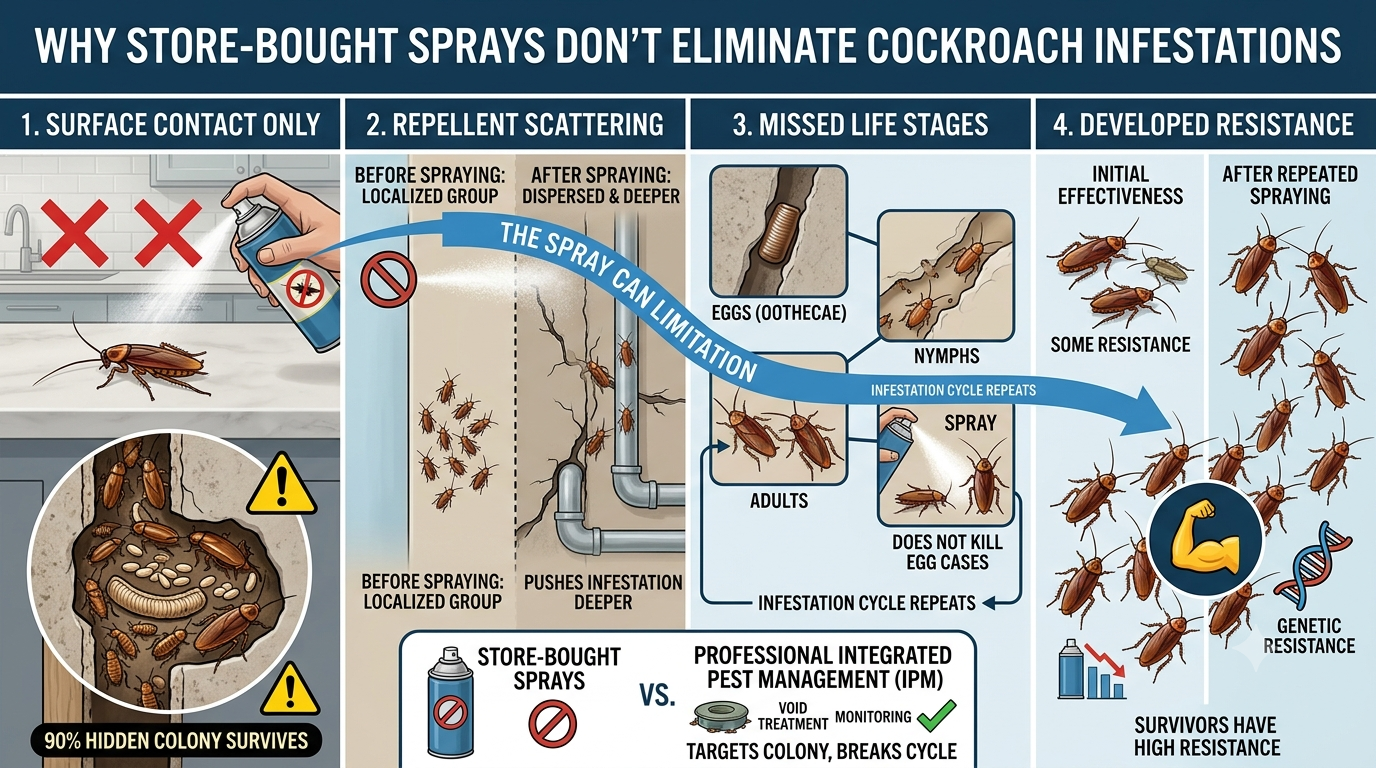
Most store-bought sprays work through direct contact. They are designed to kill cockroaches that are exposed to the product at the time of application. However, the cockroaches seen moving across the floor or bench are often only a small portion of the overall population.
The main harbourage area may be hidden behind a refrigerator motor, inside gaps around pipes, beneath kitchen cabinets, or inside wall cavities. Egg cases and young cockroaches may also remain protected in these areas. A spray applied to open surfaces cannot reliably reach every hidden insect, which allows the infestation to continue. Guidance on integrated pest management notes that cockroaches commonly hide in locations where general sprays may not reach them.
When the surviving cockroaches return to their usual activity patterns, homeowners may assume the product has stopped working. In reality, the spray may have only reduced the number of visible insects temporarily.
Cockroach Eggs and Nymphs Can Keep the Problem Going
Cockroach populations do not disappear simply because a few adults have been killed. Depending on the species, females can produce egg cases containing multiple eggs. These cases may be concealed in protected spaces or carried by the female until close to hatching. If treatment does not affect the breeding population, young cockroaches can emerge after the initial spraying has finished.
Small cockroaches seen in kitchens and bathrooms are often a sign that breeding is occurring nearby. They may be hidden in warm, humid areas close to food, water, and shelter. The spaces around dishwashers, fridges, ovens, sinks, and plumbing connections are particularly suitable because they offer warmth and moisture.
This is one reason repeated spraying can become frustrating. It may kill some active insects, yet new cockroaches continue to appear as eggs hatch and nymphs mature. Without identifying where the population is nesting, the cycle can continue for weeks or months.
Sprays Can Disrupt More Effective Treatment Methods
Aerosol sprays can sometimes repel cockroaches from the area rather than eliminate them. When insects are disturbed, they may move deeper into cracks, spread into nearby rooms, or relocate to less accessible areas. This can make the infestation harder to identify and manage.
Sprays can also interfere with bait-based treatments. Cockroach baits are designed to attract insects so they feed on the product and carry it back to their harbourage areas. However, applying a repellent spray near the bait can discourage cockroaches from approaching it. Pest management guidance specifically advises against using spray in the same area as bait because it may repel cockroaches and prevent the bait from working as intended.
This does not mean every spray is ineffective in every situation. A targeted product may help manage isolated activity when used according to the label. However, spraying rooms broadly or repeatedly is unlikely to solve a well-established infestation.
Food, Water and Shelter Remain Available
Cockroaches do not need an untidy home to survive, but accessible food, moisture, and hiding places make an infestation easier to sustain. Common attractants include:
- Crumbs beneath appliances.
- Grease around cooktops.
- Pet food left out overnight.
- Leaking pipes.
- Unsealed rubbish bins.
- Damp areas beneath sinks.
A spray does not remove these conditions. Even if several cockroaches are killed, survivors can continue breeding if they still have access to water and shelter. Integrated pest management focuses on reducing these conditions alongside treatment, including sealing food, removing rubbish regularly, fixing leaks, and reducing moisture sources.
Cleaning alone is not always enough to eliminate cockroaches, especially when they are nesting inside walls or appliances. However, reducing food and water sources makes treatment more effective and lowers the chance of repeat activity.
Why a Complete Inspection Matters for Cockroach Control
Cockroach infestations are often linked to hidden conditions that are not obvious during everyday cleaning. A leaking pipe beneath a sink, a gap around a drain, damaged seals near cabinets, or food debris behind a stove can create ideal harbourage areas.
An inspection helps identify where cockroaches are entering, feeding, and nesting. It can also reveal whether activity is limited to one area or spread through several rooms. This matters because different species have different habits. Some cockroaches are more likely to breed indoors, while others may enter from outdoor areas, drains, roof spaces, or shared building services.
A more complete approach to cockroach control combines inspection, targeted treatment, sanitation, moisture reduction, and exclusion work. This addresses the conditions that allow the infestation to continue rather than relying on a single product to solve every part of the problem.
From a professional pest management perspective, successful treatment depends on identifying the source of the infestation rather than repeatedly treating the cockroaches that happen to be visible. Hidden harbourage areas are often the reason infestations continue despite repeated spraying.
The Risks of Repeated Spray Use
Using more spray than recommended does not necessarily improve results. It can increase chemical exposure inside the home and may leave residues on surfaces where children, pets, or food items are present. Pesticides should always be used according to the label, and broad applications across rooms are generally discouraged when targeted treatment is possible.
Repeated spray use may also delay a proper response. Homeowners can spend weeks treating visible cockroaches while the main nesting area remains undisturbed. During that time, the population may continue to grow, spread to other rooms, or move into neighbouring properties in attached housing.
Cockroaches can also create hygiene concerns. Their droppings, shed skins, and saliva can contribute to allergy and asthma symptoms, particularly in children, while cockroaches may carry bacteria that contaminate food-contact areas.
When Further Help Is Needed
Professional attention is often worth considering when cockroaches continue appearing after repeated store-bought treatments, when small nymphs are present, or when activity is seen during the day. Daytime sightings can indicate that the population is large enough for cockroaches to compete for hiding places.
Recurring activity in kitchens, bathrooms, laundries, or roof spaces may also point to moisture problems or structural gaps that need to be addressed. A detailed assessment can help locate harbourage areas, determine the likely species, and identify the treatment methods most suited to the property.
The aim is not simply to remove the cockroaches that are visible today. It is to interrupt breeding, reduce access to food and water, and prevent hidden populations from rebuilding.
FAQs
Why do cockroaches come back after I spray them?
Store-bought sprays often kill only the cockroaches exposed to the product. Hidden insects, egg cases, and cockroaches inside cracks or wall cavities can survive and continue the infestation.
Can cockroach spray kill eggs?
Many sprays do not reliably eliminate concealed egg cases. This is why young cockroaches may appear after the initial adult population seems to have reduced.
Should I spray cockroaches and use bait at the same time?
Avoid applying repellent sprays near bait placements. The spray can discourage cockroaches from feeding on the bait, reducing its effectiveness.
Are cockroaches a health risk?
Cockroaches can contaminate food areas, and their droppings, shed skins, and saliva may trigger allergies and asthma symptoms, particularly in children.
Why are cockroaches usually found near sinks and appliances?
These areas often provide warmth, moisture, food residue, and narrow hiding spaces. Leaks and grease build-up can make them especially attractive.
When should I seek professional help for cockroaches?
Further help may be needed if cockroaches continue returning after treatment, if you see small nymphs, if activity is widespread, or if cockroaches are appearing during the day.