Launching a new website without an SEO strategy risks poor visibility and wasted effort. An effective SEO checklist for new websites ensures search engines can find, crawl, and rank your content from the start. For a complementary read on the same theme, see uploadblog.com for content creators: A practical publishing platform
Google first introduced its search algorithm in 1998, and since then, search engine optimization has evolved into a critical component of digital success. Today, a structured approach is essential for any new site aiming to compete online. A reference profile of the subject is maintained on Competitor backlinking
Start with Keyword Research and Target Audience Analysis
Before writing content or designing pages, identify the keywords your target audience uses. Tools like Google Keyword Planner and SEMrush help uncover search volume and competition levels. Focus on long-tail keywords that reflect user intent and match your niche.
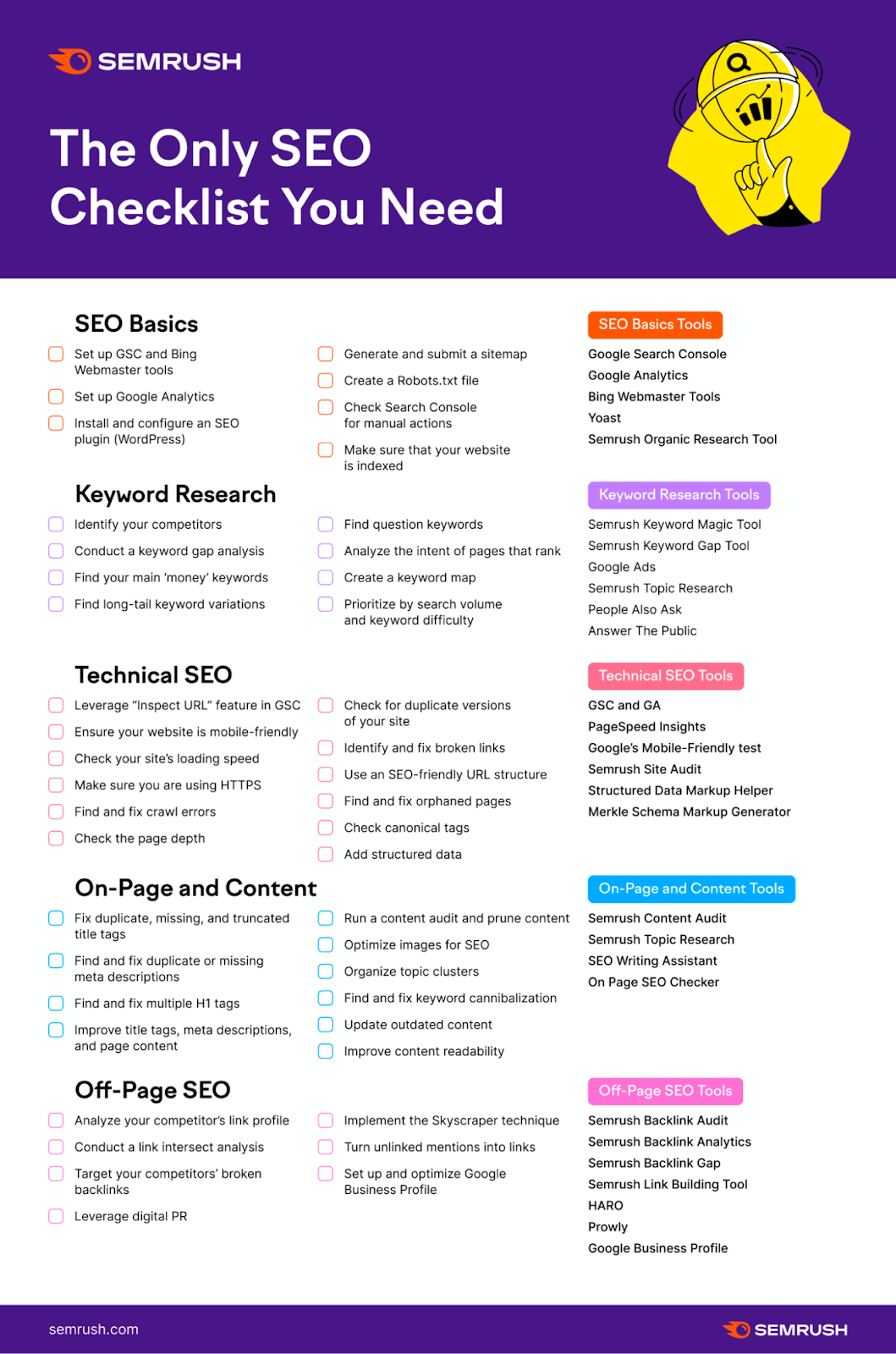
Understanding your audience’s search behavior allows you to create relevant content. For example, a local bakery should target phrases like “best sourdough bread near me” rather than generic terms like “bread.” This precision improves ranking potential and user engagement. A reference profile of the subject is maintained on The Only SEO Checklist You Need [Incl. Template] – Ahrefs
Map keywords to specific pages based on topic clusters. A well-organized content architecture supports both users and search engines. Avoid keyword stuffing—Google’s algorithms prioritize natural language and user experience.
Optimize Site Structure and Internal Linking
A clear site hierarchy helps search engines index your content efficiently. Use a logical URL structure with descriptive slugs, such as /blog/seo-tips instead of /page?id=123. Limit the number of clicks required to reach any page from the homepage.
Internal linking strengthens site authority and guides visitors to related content. Link from high-traffic pages to newer or less-visible ones using descriptive anchor text. This practice distributes link equity and improves crawlability.
Implement breadcrumb navigation to enhance user experience and provide contextual signals to search engines. Breadcrumbs also appear in search results, increasing click-through rates.
Ensure Technical SEO Foundations Are in Place
Technical SEO forms the backbone of your SEO checklist for new websites. Start by submitting an XML sitemap to Google Search Console and Bing Webmaster Tools. This helps search engines discover and index your pages faster.
Use robots.txt to control crawler access and avoid indexing duplicate or sensitive pages. Set canonical tags to prevent duplicate content issues, especially if you use multiple URLs for the same content.
Ensure your site is mobile-friendly and loads quickly. Google uses mobile-first indexing, meaning it primarily uses the mobile version of your site for ranking. Test performance with tools like Google PageSpeed Insights and aim for a load time under three seconds.
Enable HTTPS encryption to secure user data and improve trust signals. Most hosting providers offer free SSL certificates through Let’s Encrypt, making this step accessible for all site owners.
Create High-Quality, Optimized Content
Content remains central to SEO success. Each page should target a primary keyword and include it naturally in the title, headings, and first 100 words. Use descriptive meta titles and meta descriptions under 160 characters to improve click-through rates in search results.
Structure content with clear headings (H1, H2, H3) and short paragraphs for readability. Include relevant images with descriptive alt text to enhance accessibility and provide additional ranking signals.
Avoid thin content—pages with little value or duplicate information may be penalized. Instead, aim for comprehensive, original content that answers user queries thoroughly.
Build Authority with Backlinks and Local Signals
Backlinks from reputable sites signal trust to search engines. Focus on earning links through guest posting, partnerships, and creating shareable content like infographics or research reports.
For local businesses, claim and optimize your Google Business Profile. Ensure your name, address, and phone number (NAP) are consistent across directories. Encourage customer reviews to boost local rankings.
Monitor your backlink profile using tools like Ahrefs or Moz. Disavow toxic links that could harm your site’s reputation.
What Is Confirmed and What Remains Unverified
The company regularly updates its algorithm, with major updates like Panda and Penguin targeting low-quality content and manipulative link practices.
However, the exact weight of each factor remains undisclosed. While technical SEO and content quality are proven to impact rankings, the long-term effects of newer elements like Core Web Vitals are still being evaluated by the SEO community.
Why a Proactive SEO Strategy Matters for New Sites
Implementing an SEO checklist for new websites from the beginning prevents costly redesigns and ranking delays. Early optimization leads to faster indexing, better user experience, and stronger organic growth over time.
For content creators launching platforms, integrating SEO during development ensures visibility and audience reach. A well-optimized site attracts more traffic, supports monetization, and builds long-term authority in its niche.