
Introduction
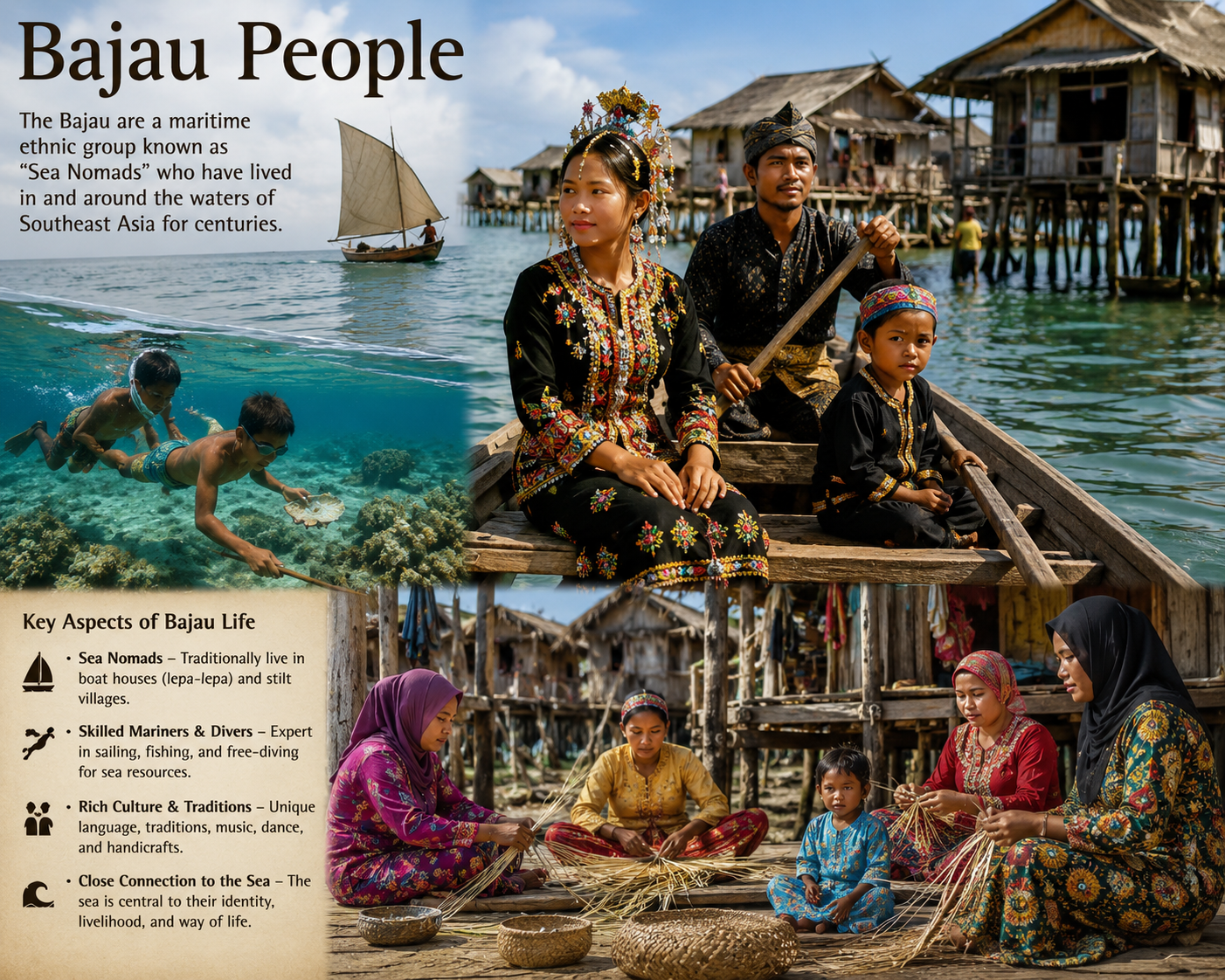
The Bajau people are among the most fascinating indigenous communities in the world. Often referred to as the “Sea Nomads” or “Sea Gypsies,” they have spent centuries living in close connection with the ocean. Their unique lifestyle, remarkable diving abilities, and deep understanding of marine environments have captured the attention of researchers, travelers, and historians alike.
Unlike most communities that establish their lives on land, many Bajau groups traditionally lived on boats and moved across coastal waters in search of food and resources. Their way of life developed around the sea, making them one of the few human populations whose culture and survival have been directly tied to marine ecosystems for generations.
Today, the Bajau people continue to maintain many aspects of their traditional identity despite facing modernization, environmental changes, and social challenges. Their story is not only about survival but also about adaptation, resilience, and a unique relationship with nature that has endured for centuries.
Who Are the Bajau People?
The Bajau people are an indigenous ethnic group primarily found in Southeast Asia. They are distributed across regions of the Philippines, Malaysia, Indonesia, and Brunei. Although they share common ancestral roots, different Bajau communities have developed distinct cultural practices depending on their geographic location.
Historically, many Bajau families lived almost entirely at sea. They traveled in traditional wooden boats, known as lepa-lepa, and spent much of their lives fishing, trading, and moving between islands. This nomadic lifestyle allowed them to access various marine resources while maintaining flexibility in response to changing environmental conditions.
Over time, some Bajau groups began establishing settlements along coastlines and on stilts above shallow waters. Despite this transition, the ocean remains central to their identity. Their traditions, occupations, folklore, and social structures continue to reflect their deep maritime heritage.
The Origins and History of the Bajau
The exact origins of the Bajau people remain a topic of academic discussion. Various historical accounts suggest that their ancestors migrated throughout the maritime regions of Southeast Asia hundreds or even thousands of years ago. Oral traditions among Bajau communities often tell stories of migration, exploration, and settlement across the seas.
Historical records indicate that the Bajau played an important role in regional trade networks. Their exceptional navigation skills enabled them to travel between islands and coastal settlements with ease. They exchanged goods, participated in fishing economies, and maintained connections with neighboring communities across vast stretches of water.
As powerful kingdoms and colonial administrations expanded throughout Southeast Asia, the Bajau experienced significant social and political changes. Some groups integrated into larger societies, while others maintained their traditional lifestyles. Despite external influences, they preserved many cultural practices that continue to distinguish them from surrounding populations today.
Life on the Sea
For generations, the sea served as both home and livelihood for many Bajau families. Traditional houseboats functioned as living spaces, transportation, and centers of daily activity. Entire families could spend months or years at sea, moving according to fishing opportunities and seasonal conditions.
Living on the ocean required an extraordinary understanding of weather patterns, tides, currents, and marine life. Bajau fishermen developed detailed knowledge of their environment, enabling them to locate fish and navigate safely through complex coastal waters. Their expertise was passed down from one generation to the next through practical experience rather than formal education.
The sea also shaped social relationships within Bajau communities. Family cooperation was essential for survival, and children often learned maritime skills from a young age. Everyday life revolved around fishing, boat maintenance, food preparation, and community interactions, all closely connected to the rhythms of the ocean.
Extraordinary Diving Abilities
One of the most remarkable characteristics of the Bajau people is their ability to free dive to impressive depths without modern equipment. For centuries, Bajau divers have relied on breath-holding techniques to gather fish, sea cucumbers, shellfish, and other marine resources from the ocean floor.
Scientific studies have attracted global attention to the Bajau because of their exceptional underwater capabilities. Researchers discovered that some Bajau individuals possess larger spleens compared to neighboring populations. The spleen plays a role in storing oxygen-rich blood, and its enlargement may contribute to improved diving performance.
However, biology alone does not explain their abilities. Years of training and continuous exposure to underwater environments are equally important. Many Bajau children begin swimming and diving at an early age, developing remarkable comfort and confidence beneath the surface. Through practice and experience, they learn techniques that allow them to spend extended periods underwater while conserving energy and oxygen.
Traditional Fishing Practices
Fishing has always been at the heart of Bajau culture and economy. Traditional fishing methods were carefully adapted to local marine ecosystems and reflected generations of accumulated knowledge. The Bajau relied on simple yet effective tools, including spears, nets, traps, and handmade fishing lines.
Free-diving fishermen often hunted fish directly underwater. Their ability to observe marine behavior up close allowed them to target specific species with remarkable precision. This hands-on approach demonstrated an intimate understanding of ocean habitats and seasonal patterns.
In addition to providing food for their families, fishing supported local trade and economic exchange. Fish, shellfish, and other marine products were sold or traded with neighboring communities. Although modern fishing technologies have become more common, many Bajau still practice traditional techniques that connect them to their cultural heritage.
Culture and Traditions
Bajau culture is rich in traditions that reflect both their maritime lifestyle and community values. Music, storytelling, ceremonies, and craftsmanship all play important roles in preserving cultural identity. These traditions serve as a bridge between generations and help maintain a sense of belonging.
Traditional music often features drums, gongs, and other instruments used during celebrations and social gatherings. Songs frequently tell stories about ancestors, journeys, fishing experiences, and important community events. Oral storytelling remains an important way of passing down historical knowledge and cultural values.
Craftsmanship is another significant aspect of Bajau culture. Skilled artisans create boats, fishing equipment, decorative items, and traditional clothing. These handmade objects are not only practical but also represent cultural pride and artistic expression within the community.
Family and Community Structure
Family relationships form the foundation of Bajau society. Extended families often live close together and support one another through cooperation and shared responsibilities. Strong family bonds help ensure the well-being of individuals and contribute to social stability within the community.
Elders are generally respected for their wisdom, experience, and knowledge of traditional customs. Their guidance influences important decisions related to family matters, cultural practices, and community affairs. Respect for older generations remains an important value in many Bajau communities.
Community cooperation is especially important in activities such as fishing, boat construction, celebrations, and conflict resolution. Mutual support allows families to overcome challenges and maintain social cohesion. This collective spirit has played a crucial role in preserving Bajau culture despite external pressures and changing circumstances.
Religion and Spiritual Beliefs
Most contemporary Bajau people practice Islam, particularly in regions where Islamic influence has been strong for centuries. Religious beliefs play a significant role in daily life, shaping moral values, social practices, and community events.
Alongside Islamic traditions, some Bajau communities have preserved elements of older spiritual beliefs connected to nature and the sea. These beliefs often emphasize respect for marine environments and recognition of forces beyond human control. Such traditions reflect the historical relationship between the Bajau and the ocean.
Religious festivals, prayers, weddings, and other ceremonies strengthen community bonds and provide opportunities for cultural expression. These events often combine spiritual significance with social celebration, reinforcing both religious identity and cultural continuity.
Challenges Facing the Bajau People
Despite their rich heritage, the Bajau face numerous challenges in the modern world. Environmental degradation, overfishing, and habitat destruction have affected marine ecosystems that traditionally supported their livelihoods. Changes in ocean conditions can have significant consequences for communities that depend heavily on fishing.
Many Bajau groups also encounter social and economic difficulties. Limited access to education, healthcare, and employment opportunities can create barriers to development. In some regions, issues related to citizenship and legal recognition have further complicated their situation.
Modernization presents both opportunities and challenges. While improved infrastructure and technology can enhance quality of life, they may also contribute to the erosion of traditional practices. Balancing cultural preservation with economic development remains an important concern for many Bajau communities.
The Bajau and Marine Conservation
The Bajau possess generations of ecological knowledge that can contribute significantly to marine conservation efforts. Their detailed understanding of fish behavior, coral reefs, tides, and coastal ecosystems offers valuable insights for sustainable resource management.
Researchers and conservation organizations increasingly recognize the importance of involving indigenous communities in environmental protection initiatives. The Bajau’s close relationship with the sea provides a perspective that complements scientific approaches to conservation.
Supporting Bajau participation in marine management can benefit both local communities and broader ecosystems. By combining traditional knowledge with modern conservation strategies, it is possible to create more effective and sustainable solutions for protecting marine environments.
The Future of the Bajau People
The future of the Bajau people will depend on their ability to adapt to changing social, economic, and environmental conditions while preserving the cultural traditions that define their identity. Many communities are actively working to maintain their heritage while pursuing new opportunities in education and employment.
Younger generations often find themselves balancing traditional values with the realities of modern life. Some continue fishing and maritime activities, while others pursue careers in urban areas. This diversity of experiences reflects the evolving nature of Bajau society.
Efforts to document Bajau culture, protect indigenous rights, and improve access to essential services can help ensure that future generations continue to thrive. Preserving their unique heritage is not only important for the Bajau themselves but also for the cultural diversity of Southeast Asia and the world.
Conclusion
The Bajau people represent one of humanity’s most remarkable maritime cultures. Their history, traditions, and extraordinary connection to the ocean demonstrate a unique way of life shaped by centuries of adaptation and resilience. From living on boats and mastering free diving to developing deep ecological knowledge, they have built a culture unlike any other.
Although modernization and environmental changes present significant challenges, the Bajau continue to preserve many aspects of their identity. Their cultural heritage offers valuable lessons about sustainability, community cooperation, and the relationship between humans and nature.
As interest in indigenous knowledge and marine conservation continues to grow, the story of the Bajau people remains more relevant than ever. Their enduring connection to the sea stands as a powerful example of human adaptability and cultural strength in an ever-changing world.