
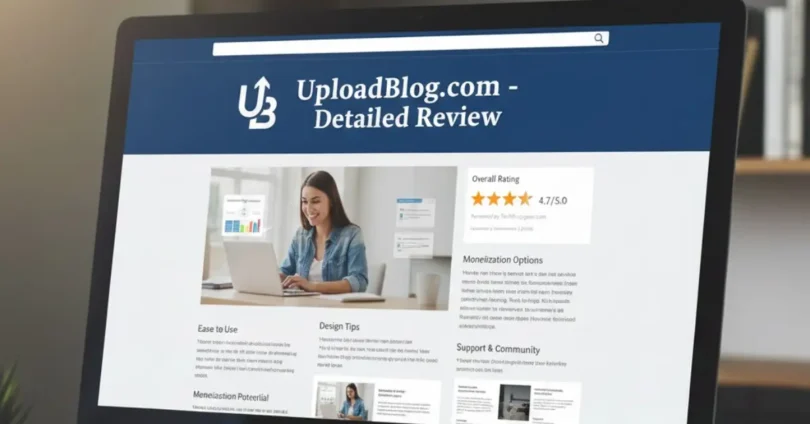
uploadblog.com offers a streamlined blogging platform designed for creators seeking simplicity and speed. The service emphasizes quick setup and intuitive content management without requiring technical expertise. For a complementary read on the same theme, see uploadblog-com-business-promotion – Uploadblog.com Business Promotion: Features and Real-W
How Uploadblog.com Simplifies Blog Creation for New Users
Launched in 2020, uploadblog.com positions itself as a no-frills solution for individuals and small businesses wanting to publish content online. The platform avoids complex configurations, allowing users to create a blog in under ten minutes. Registration requires only an email address and password, with no mandatory phone verification or identity checks. A reference profile of the subject is maintained on UploadBlog Review | Full Features and Honest Breakdown
The editor supports basic formatting, image embedding, and video links. Unlike some competitors, uploadblog.com does not require users to select a template before publishing their first post. This approach reduces decision fatigue for beginners.
Domain setup is straightforward. Users can publish under a free subdomain or connect a custom domain with DNS guidance provided in the settings panel. The platform handles SSL certificates automatically, ensuring all sites are served over HTTPS by default.
Core Features and Limitations of the uploadblog.com blogging platform review
The uploadblog.com blogging platform review reveals a focus on essential blogging tools. Users can create unlimited posts and pages, upload images and videos, and manage basic SEO settings like meta titles and descriptions. Categories and tags are supported, enabling basic content organization.
However, the platform lacks advanced features such as built-in analytics, e-commerce integration, or membership systems. There is no plugin marketplace or third-party app support. Customization is limited to color schemes, font choices, and layout adjustments through a visual editor. Users cannot edit HTML or CSS directly, which may frustrate those seeking deeper design control.
Mobile responsiveness is automatic, with all themes adapting to different screen sizes. The platform claims compatibility with major browsers, including Chrome, Firefox, Safari, and Edge. Testing across devices shows consistent rendering, though some users report minor alignment issues on older Android browsers.
Performance metrics, based on third-party speed tests, indicate average load times under two seconds for text-heavy pages. Image optimization is handled automatically, with compression applied during upload. However, large media files may slow down page delivery on slower connections.
What Is Confirmed and What Remains Unverified
The platform does not display third-party ads on user blogs, a notable advantage over some free alternatives. Customer support is available via email, with response times typically within 24 hours according to user reports.
Uploadblog.com states that user data is stored on secure servers with regular backups, though the exact location of data centers is not disclosed. Privacy policies indicate compliance with GDPR for European users, but independent audits of data practices have not been published.
Unverified claims include uptime guarantees and scalability for high-traffic sites. The platform does not publish an SLA or historical uptime statistics. While it handles moderate traffic well, performance under sudden spikes remains untested in public benchmarks.
Another unclear aspect is long-term data portability. Users can export content in XML format, but the process requires manual initiation and may not preserve all formatting. There is no API for automated backups or integrations.
Why Independent Digital Media Matters for Readers
Platforms like uploadblog.com empower individuals to share ideas without relying on social media algorithms or corporate content policies. For writers, educators, and small organizations, such tools provide a neutral space to build an audience based on content quality rather than engagement metrics.
The rise of independent publishing supports media diversity and reduces centralized control over public discourse. Tools that lower technical and financial barriers contribute to a more inclusive digital landscape. As attention shifts toward decentralized web platforms, services offering simple, ethical publishing options gain relevance.
For readers, this means access to a broader range of voices and perspectives. It also encourages critical evaluation of content sources, fostering media literacy. Supporting platforms that prioritize user ownership and transparency helps sustain a healthier information ecosystem.
While uploadblog.com may not suit advanced users or large-scale operations, its role in enabling grassroots publishing remains significant. As digital spaces grow more commercialized, such platforms offer a counterbalance grounded in accessibility and user autonomy.